
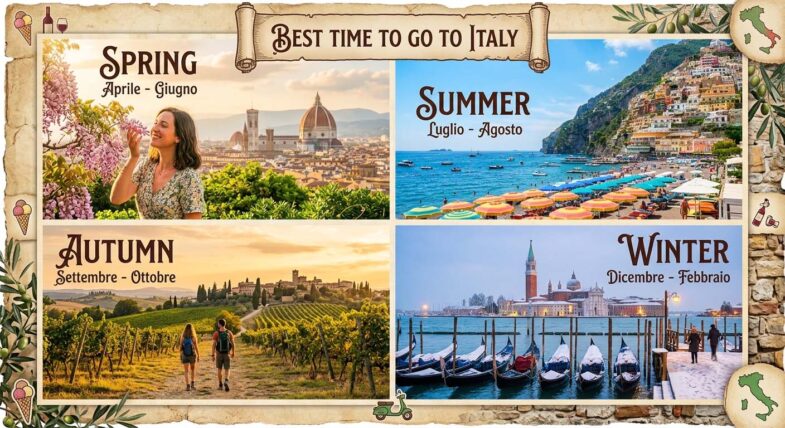
Best Time to Go to Italy: A Month-by-Month Travel Guide
Italy is one of those destinations that offers something special in every season, making many travelers wonder about the best time to go to Italy. You can wander through ancient Roman ruins, relax on Mediterranean beaches, ski in the Alps, enjoy world-famous cuisine, or watch vineyards change color across the countryside.
So, what’s the best time to go to Italy?
For most travelers, April to June and September to October offer the best mix of pleasant weather, manageable crowds, and excellent sightseeing conditions. That said, the ideal time depends on your budget, travel style, and the regions you plan to visit.
This guide breaks down Italy month by month so you can choose the perfect time for your trip.
Quick Guide: Best Time to Visit Italy
| Travel Goal | Best Time |
|---|---|
| Sightseeing | April–June, September–October |
| Beaches | June–August |
| Wine Tours | September–October |
| Cheapest Travel | January–March, November |
| Ski Holidays | December–March |
| Photography | April, May, September |
| Honeymoon | May, June, September |
| Family Vacations | June, July, August |
When Is the Best Time to Go to Italy?
If you’re asking when is the best time to go to Italy, late spring and early autumn are usually the top choices.
These months offer:
Comfortable temperatures
Longer daylight hours
Beautiful scenery
Outdoor dining
Fewer crowds than peak summer
Easier sightseeing
Cities like Rome, Florence, Venice, and Milan are much more enjoyable when you’re not walking through extreme summer heat. Travelers planning European vacations often compare this season with the best time to visit paris or the best time to visit london for similar sightseeing weather.
Italy by Season
Italy’s climate varies from the snowy Alps in the north to the warm Mediterranean coast in the south.
Spring (March to May)
Spring is one of the most popular seasons.
Weather:
Mild temperatures
Blooming gardens
Fresh countryside
Comfortable walking weather
Average temperatures:
12°C–24°C (54°F–75°F)
Best for:
Rome
Florence
Venice
Tuscany
Lake Como
This season is perfect for sightseeing before the summer crowds arrive.
Summer (June to August)
Summer brings long sunny days and vibrant coastal destinations.
Weather:
Hot temperatures
Sunny beaches
Busy tourist attractions
Average temperatures:
25°C–35°C (77°F–95°F)
Best for:
Amalfi Coast
Sicily
Sardinia
Cinque Terre
Italian Riviera
Keep in mind that July and August are the busiest months of the year.
Hotels and flights are often at their highest prices.
Autumn (September to November)
Many experienced travelers consider autumn the best time of year to go to Italy.
The weather remains pleasant while summer crowds begin to disappear.
Highlights include:
Wine harvest season
Fall colors
Comfortable sightseeing
Local food festivals
September often feels like an extension of summer without the busiest crowds.
Winter (December to February)
Winter offers a completely different side of Italy, with quieter cities, festive holiday celebrations, and snow-covered mountain landscapes.
Expect:
Christmas markets
Snow-covered mountains
Ski resorts
Lower hotel prices in many cities
Northern Italy becomes much colder, while southern regions remain relatively mild.
Winter is ideal if you prefer quieter attractions and lower travel costs. It can also be a good season to compare with the best time to visit iceland if you’re planning a cold-weather adventure.
Month-by-Month Breakdown
January
Pros:
Lowest crowds
Great hotel deals
Ski season
Cons:
Cold weather
Shorter daylight
Best for:
Milan
Turin
Dolomites
Italian Alps
February
February remains quiet outside Carnival celebrations.
Popular experiences include:
Venice Carnival
Winter sports
Museum visits
Expect cool temperatures across much of the country.
March
Spring slowly arrives.
You’ll notice:
Warmer afternoons
Blossoming flowers
Fewer tourists
March is excellent for city breaks.
April
April is one of the best months to visit.
Reasons include:
Mild weather
Green landscapes
Outdoor cafés
Easter celebrations
Many travelers consider April nearly perfect for sightseeing.
May
May combines warm temperatures with manageable crowds.
You’ll enjoy:
Longer days
Comfortable walking
Beautiful gardens
Pleasant evenings
This is one of the top months for first-time visitors.
June
Summer begins without reaching peak tourist numbers.
Ideal for:
Beaches
Coastal towns
Outdoor festivals
Accommodation prices begin rising toward the end of the month.
July
July brings:
Hot weather
Busy attractions
Beach vacations
School holidays
Book flights and hotels well in advance.
August
August is extremely busy.
Many Italians also take vacations during this month.
Expect:
Full beaches
High prices
Crowded landmarks
Hot afternoons
If possible, schedule sightseeing early in the morning.
September
September is widely considered one of the best times to visit Italy because it combines pleasant weather with a more relaxed travel atmosphere.
Benefits include:
Warm weather
Smaller crowds
Wine harvest
Comfortable evenings
Many travelers return specifically during September.
October
October combines beautiful scenery with cooler temperatures.
It’s excellent for:
Tuscany
Florence
Rome
Food festivals
Autumn colors make photography especially rewarding.
November
Tourism slows significantly.
Advantages include:
Lower prices
Quiet museums
Easier reservations
Weather becomes cooler and wetter in many regions.
December
Italy feels festive throughout December.
Enjoy:
Christmas lights
Holiday markets
Seasonal food
Winter mountain resorts
Major cities become lively again during the holiday season.
Best Time to Go to Italy
If you’re planning best time to go to Italy 2026, the seasonal advice remains largely the same.
For most travelers:
April to June is ideal for sightseeing.
September and October offer fantastic weather with fewer crowds.
January, February, and November are better for travelers looking to save money.
June through August is perfect for beach vacations.
Booking flights and hotels several months ahead is recommended, especially for travel during spring, summer, and major holidays. Travelers considering nearby European destinations may also find the best time to visit portugal useful when planning a multi-country itinerary.
Cheapest Time to Visit Italy
Budget travelers usually find the lowest prices during:
January
February
Early March
November
Benefits include:
Lower hotel rates
Less crowded attractions
More affordable airfare
Keep in mind that some coastal resorts and seasonal attractions may operate with reduced hours during the quieter months.
Best Time for Popular Destinations
Rome
Best months:
April
May
September
October
Avoid extreme summer heat if you plan on walking between historical sites.
Venice
Visit during:
April
May
September
These months offer pleasant weather and fewer crowds than midsummer.
Florence
Late spring and early autumn provide comfortable temperatures for exploring museums and historic streets.
Amalfi Coast
The coastline shines between:
May
June
September
Warm weather combines with fewer visitors than July and August.
Tuscany
Best visited:
May
September
October
Autumn brings vineyard harvests and stunning countryside colors. Travelers exploring Scandinavia at another time of year may also want to research the best time to visit norway.
What to Pack
Packing depends on the season.
Spring
Bring:
Light jacket
Comfortable walking shoes
Umbrella
Summer
Pack:
Sunscreen
Sunglasses
Lightweight clothing
Hat
Reusable water bottle
Autumn
Bring:
Sweater
Waterproof jacket
Comfortable shoes
Winter
Pack:
Warm coat
Gloves
Scarf
Waterproof boots if visiting northern Italy
Travel Tips for First-Time Visitors
A little planning goes a long way.
Helpful advice includes:
Reserve major attractions in advance.
Validate train tickets where required.
Learn a few basic Italian phrases.
Carry comfortable walking shoes.
Stay hydrated during summer.
Keep small cash for local shops and cafés.
Visit popular landmarks early in the morning.
These simple habits can make your trip much smoother.
Mistakes to Avoid
Visiting Every Major City in One Week
Italy has plenty to see.
Trying to fit Rome, Venice, Florence, Milan, Naples, and Sicily into one short trip usually feels rushed.
Choose fewer destinations and enjoy them at a relaxed pace.
Underestimating Walking
Historic city centers involve lots of walking over stone streets.
Supportive footwear makes a huge difference.
Waiting Too Long to Book
Popular hotels near famous attractions often sell out months ahead during peak travel periods.
Early booking usually means better prices and more choices.
Frequently Asked Questions
What is the best time of year to go to Italy?
Most travelers prefer April through June and September through October because of pleasant weather, comfortable sightseeing, and moderate crowds.
Is summer too hot for Italy?
In many parts of the country, especially Rome, Florence, and southern Italy, July and August can be very hot, with daytime temperatures often exceeding 30°C (86°F).
When is Italy least crowded?
January, February, and November generally see fewer tourists outside holiday periods.
What’s the cheapest month to visit Italy?
January is often one of the most affordable months for flights and hotels, particularly in major cities.
September a Good Time to Visit Italy? Why Early Fall Is a Favorite for Travelers
Yes. September combines warm weather, smaller crowds than summer, beautiful scenery, and excellent conditions for sightseeing and food experiences.
Plan Your Trip Around Your Travel Style
The best time to go to Italy depends on what you want from your vacation. If your priority is exploring famous landmarks with pleasant weather, aim for April through June or September through October. Travelers dreaming of Mediterranean beaches will enjoy the warmth of summer, while budget-conscious visitors can often save by traveling during the quieter winter months.
Whether you’re deciding when is the best time to go to Italy, searching for the best time of year to go to Italy, or planning best time to go to Italy 2026, matching your travel dates with your interests will help you get the most from your trip. With a little planning, you’ll experience Italy’s incredible history, food, scenery, and culture at a pace that suits your style and budget.